FAIR’nRG – Data and New Technologies in Research
Researchers from a wide range of disciplines, representatives of central administrative departments and industry experts came together to discuss current challenges, share experiences and explore practical solutions for responsible data handling in research.
As part of one of the workshops, the Interreg Upper Rhine programme research project FAIR’nRG was presented as a practical use case. The project demonstrates how emerging technologies can support the efficient, secure digitalisation and decentralisation of the energy ecosystem. Its interdisciplinary nature and use of innovative digital solutions make it a particularly relevant example for discussing the intersection of research data management, data protection and AI compliance.
The workshop provided an opportunity to explore how innovation and responsible data governance can be integrated into research practice. A key question was how research consortia can establish a sound framework for data responsibility from the very beginning of a project.
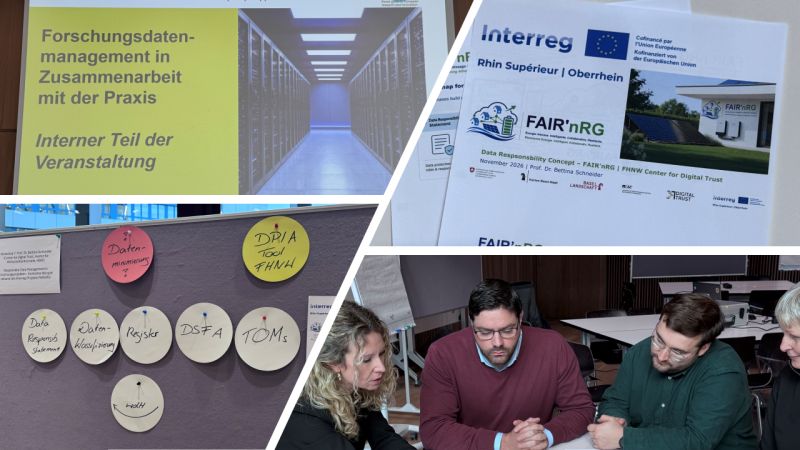
Five Steps Towards Responsible Data Management
Based on the discussions, five practical measures can help research consortia establish a robust and manageable approach to data responsibility:
1. Establish a Data Responsibility Statement
Define a shared commitment to responsible data management across the consortium. Clarify how data will be handled, which legal and ethical frameworks apply, and what responsibilities the participating organisations assume.
2. Classify Research Data
Develop an overview of the data collected, generated and processed throughout the project. Classify the data according to its sensitivity and identify the corresponding legal, organisational and technical requirements.
3. Maintain a Directory of Processing Activities
Document the consortium’s key data processing operations to ensure transparency and accountability. Particular attention should be paid to processes involving artificial intelligence. The directory should remain clear, practical and proportionate to the project’s activities.
4. Conduct a Data Protection Impact Assessment (DPIA)
Identify data processing activities that could pose high risks to the rights and freedoms of individuals. A DPIA helps research consortia assess potential risks at an early stage and define appropriate safeguards. The DPIA tool provided by the Center for Digital Trust FHNW offers a practical starting point.
5. Implement Technical and Organisational Measures (TOMs)
Translate identified risks and requirements into appropriate technical and organisational safeguards. The guidance published by the Swiss Federal Data Protection and Information Commissioner (FDPIC) can serve as a useful reference when developing these measures.
Building a Shared Culture of Data Responsibility
The objective is establish a common understanding of data responsibility across the consortium and ensure that this understanding is reflected in everyday research activities.
We would like to thank Andrea Ch. Kofler and Sebastian Perrig, PhD, for the invitation, as well as all participants for their valuable contributions and the open, inspiring exchange.
The discussions reinforced an important message: responsible data management is not an obstacle to innovation. It is a prerequisite for building trust, enabling collaboration and making research innovation sustainable.
Project Consortium
Project Leader
Project Partners
- Furtwangen University
- Offenburg University of Applied Sciences (Technology, Economics and Media)
- Agence du climat
- Collectivité européenne d’Alsace
- University of Applied Sciences Northwestern Switzerland
- Swiss Confederation
- Canton of Basel-Landschaft
- Canton of Basel-Stadt
- TRION-climate e. V.
- Chamber of Commerce and Industry Alsace Eurométropole
- badenova AG & Co. KG
- Brasseurs d’Energie
- Strasbourg Electricity Réseaux
- Hightech Zentrum Aargau AG
- Primeo Energie AG
- Stadtwerke Villingen-Schwenningen GmbH
Project Sponsors