Center for Digital Trust FHNW: Building on Ten Years of Expertise and Impact
The FHNW School of Business has established the Center for Digital Trust FHNW, recognizing the breadth and impact of the team’s work in the field of digital trust. The new Center builds on ten years of expertise and activities that began in 2016 with a focus on Cybersecurity & Resilience and have since developed into a broader, interdisciplinary approach to digital trust.
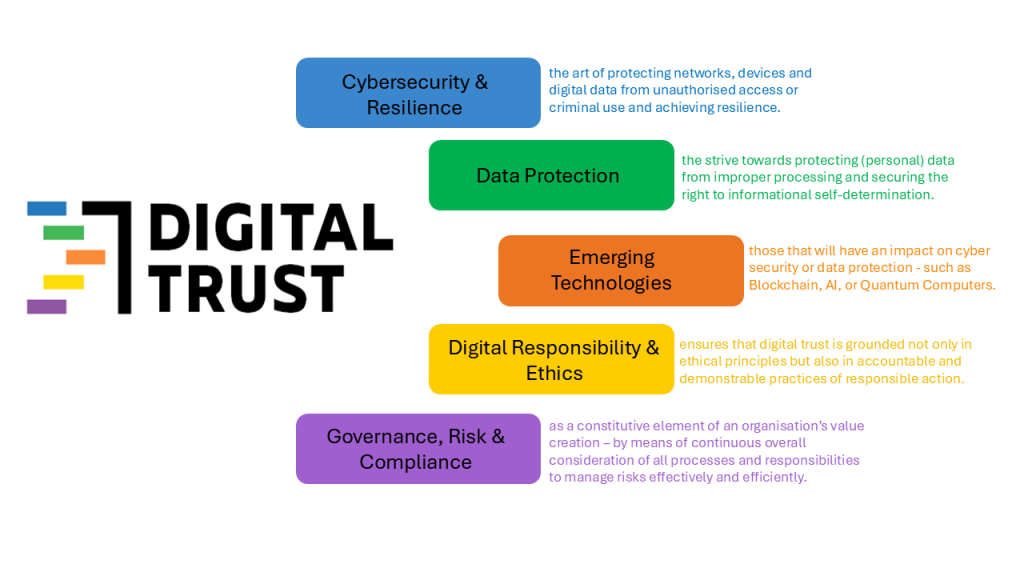
The Center brings together five complementary areas of expertise: Cybersecurity & Resilience, Data Protection, Emerging Technologies, Digital Responsibility & Ethics, and Governance, Risk & Compliance. Together, these areas provide the foundation for research, education and continuing education activities addressing the challenges of a rapidly evolving digital environment.
The Center’s work is guided by the ambition to “shape a more trustworthy and secure digital world.” Its activities reflect the growing importance of digital trust as a prerequisite for sustainable digital transformation from trustworthy digitization in businesses and organizations to resilient critical infrastructures, responsible technology use and the development of future digital talents.
Ten years of developing digital trust
The establishment of the Center marks the latest step in a development that has taken place over the past decade. Since its beginnings in 2016, the team has continuously expanded its expertise, research activities, educational offerings and external partnerships.
The Center’s current activities span research, degree programs, continuing education, student engagement and collaboration with organizations and institutions in Switzerland and internationally.
The breadth of this work was presented during a team meeting on Tuesday, 6 October 2026, attended by Dr. Rico Travella, Director of the FHNW School of Business; Prof. Dr. Rolf Dornberger, Head of the Institute for Business Informatics; and Prof. Dr. Uwe Leimstoll, Lecturer at the Institute for Business Informatics.
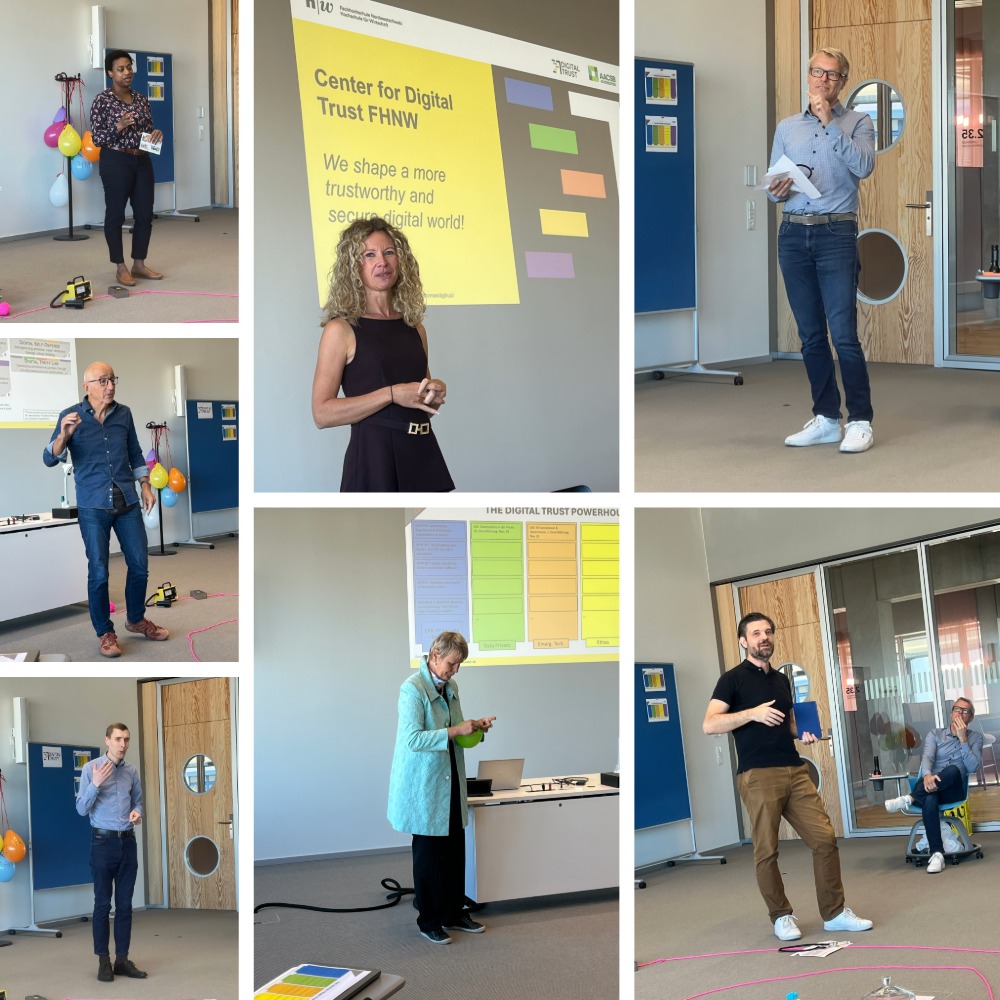
The team used the meeting to provide an overview of its current areas of expertise and selected projects. Presentations covered the following topics: Digital Trust education, Society 5.0, payment systems, quantum computing, continuing education, digital responsibility, IT/OT security, research excellence and international research cooperation.
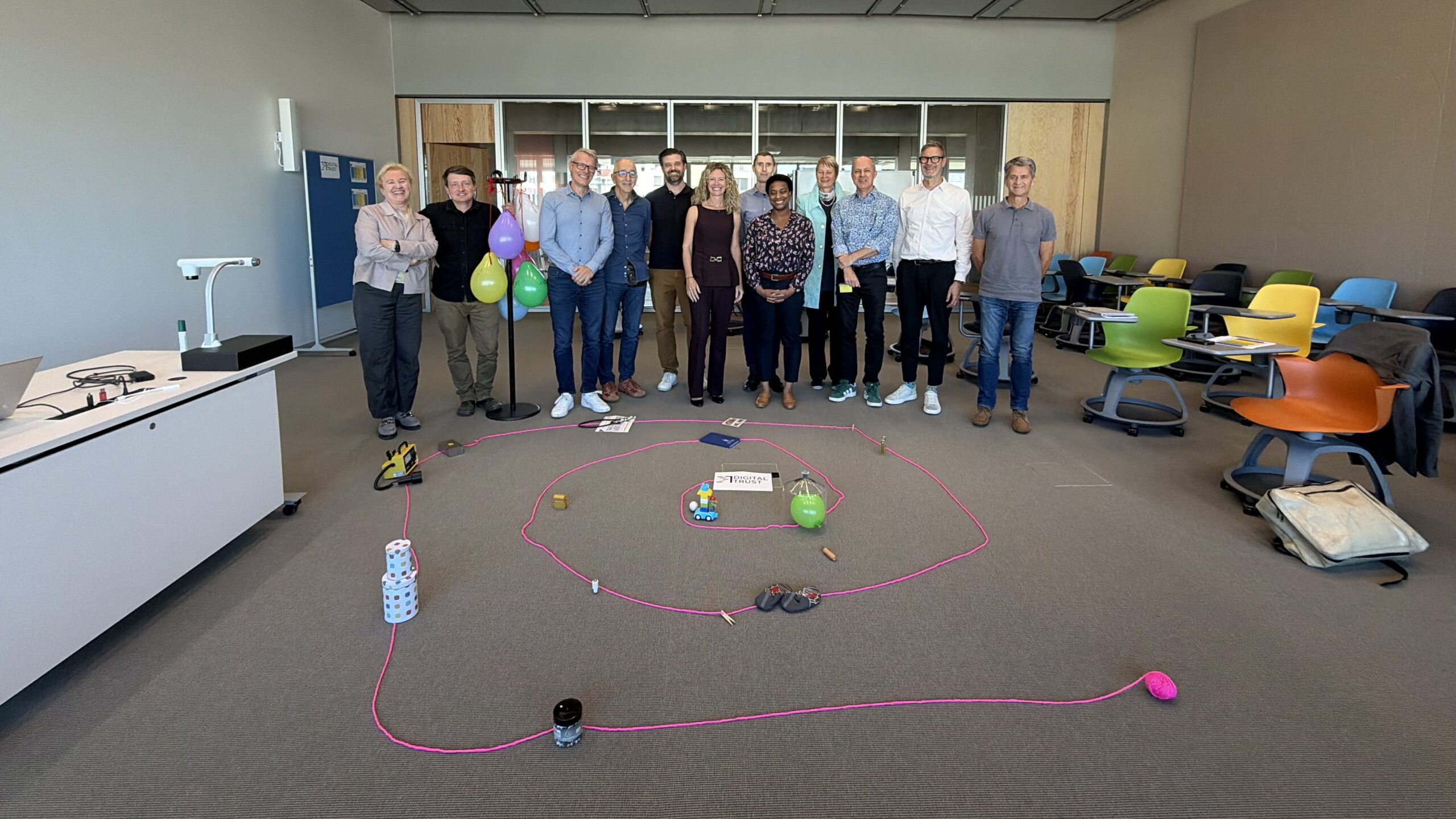
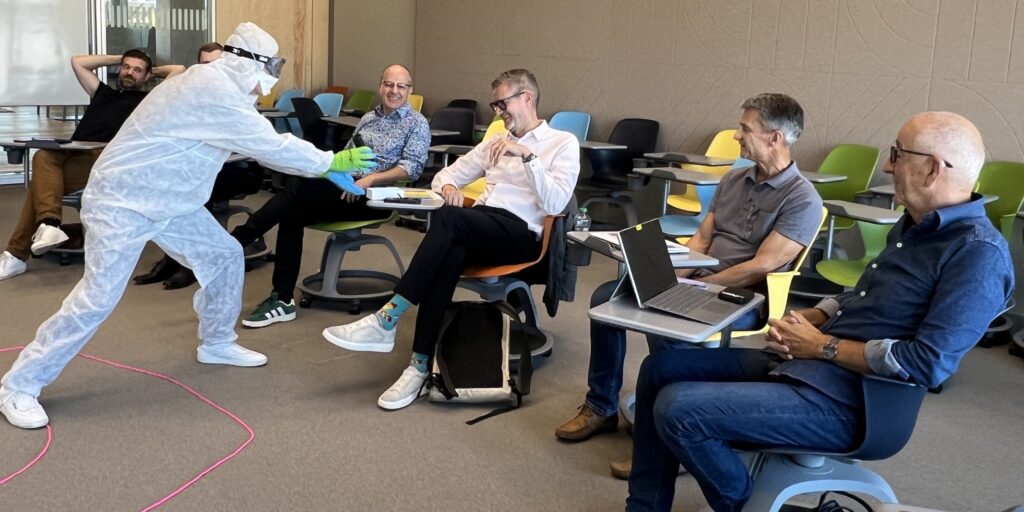
The presentations combined substantive insights with a creative format. Each presenter brought an artifact representing their area of work and placed it along a pink thread laid across the room, symbolizing the development of the Center and the connections between its different activities. Frank’s presentation on education was particularly memorable: dressed as a nuclear scientist and equipped with a protective suit, mask, goggles and a Geiger counter, he introduced his topic with a deliberately playful demonstration.
From research and education to practical impact
The Center’s activities address four broad areas of impact: businesses and organizations; governments and infrastructure; students and future talents; and society and the scientific community.
For businesses and organizations, the Center supports trustworthy digitalization, compliance with data regulation and the development of approaches that integrate digital trust into organizational practice. Projects such as MECyS, GEIGER, Digital Trust Radar, ReallWorldRadar, 360 TrustUp, OT Skillup and Integrity@Inside, SAS KI Compliance and SAS Datenschutz illustrate this work.
In the area of governments and infrastructure, activities focus on strengthening the resilience of critical infrastructures, contributing expertise to policy discussions and supporting the responsible use of emerging technologies. Examples include Albatros, FAIRnRG, Narowin Copilot, ENISA activities, ISACA academic representation, the CISS advisory board, DCCTS, Integrity@Inside and work related to e-ID and data spaces.
Education is another central pillar. Through initiatives such as the Digital Trust Specialization, Digital Trust Day, 360inControl Student Audits, the cybersecurity lab and the quantum elective, students are given opportunities to engage critically with current and emerging technologies and to consider their broader societal implications. The Center also contributes to international and intercultural learning through activities such as social-engineering projects involving Africa.
Finally, our work contributes to society and the scientific community by helping vulnerable groups navigate the digital world, fostering diversity and reducing biases, and contributing to discussions around the values and safeguards needed for a trustworthy AI-based digital future. The projects that contribute to these efforts are Digital Trust Days, Elternkompass, ISACA SheLeadsTech, Cooperation with African Universities, Dreilandspiel, Digital Trust Radar, and Digital Payment Systems.
New Digital Trust specialization planned for 2027
A further focus of the meeting was the development of the Digital Trust Specialization planned for the autumn semester 2027 for BSc WI, BSc BIT and BSc IM. The planned specialization combines six modules covering different dimensions of digital trust:
- Cybersecurity (6 ECTS) – building secure and resilient organizations through effective cybersecurity practices
- Compliance Management (6 ECTS) – enabling digital trust through compliance, data privacy and responsible AI governance
- Risk Management & Audit (6 ECTS) – strengthening organizational resilience through risk-aware governance, security and Information Systems auditing
- Data Spaces (6 ECTS) – building trusted and secure digital ecosystems that enable data sovereignty and sustainable collaboration
- Digital Self-Defense (3 ECTS) – strengthening personal cyber resilience through critical thinking
- Digital Trust Lab (3 ECTS) – developing professional profiles through industry exposure and certification
The meeting also provided an opportunity for an open discussion about the future development of the Center and its activities. Prof. Dr. Rolf Dornberger highlighted his expectations for continued promising achievements from the team, while Dr. Rico Travella contributed reflections on the role and future of continuing education.
A strong foundation for the next chapter
The Center enters this next phase with an established portfolio of research, education and external engagement. The team’s 2025 figures illustrate this with six new research projects, eight active projects, more than 35 consortium partners, 22 submitted proposals, approximately 20 peer-reviewed publications, more than 800 students in courses and over 60 student supervisions.
The establishment of the Center for Digital Trust FHNW represents the continuation and institutional recognition of a development that has been underway for a decade. With its combination of research, education, continuing education and external collaboration, the Center brings together the expertise needed to address the opportunities and challenges of digital transformation from a digital trust perspective.
We would like to thank Dr. Rico Travella, Prof. Dr. Rolf Dornberger, and Prof. Dr. Uwe Leimstoll for taking the time to engage with the team’s work and for their valuable perspectives on its future development. We also thank the entire team for its continued commitment and contribution to building the Center for Digital Trust FHNW and its mission to shape a more trustworthy and secure digital world.